Building on the work of the Open Air Podcasting initiative, this webinar will explore the use of community-based podcasting for climate justice. Over the 60 minutes, participants will learn about grassroots, accessible approaches to podcasting as tools for frontline communities and climate organizers. Participants will have the opportunity to begin to plan how to tell their own stories to shift climate narratives and build relationships to inspire social justice-based climate action.
Event Summary
Jacqueline welcomes guests to the call, introduces the Nova Scotia Environmental Network (NSEN) and guest speaker Sheena Cameron, and gives a land acknowledgment.
Jacqueline hands it over to Sheena, who builds on the land acknowledgment.
She explains that climate justice is social justice and highlights how important and relevant the land acknowledgment is to the topic of climate justice. While acknowledgments are not enough to repair the impacts of colonialism, they are an important step toward reconciliation and building positive relationships.
She talks about the Open-Air Podcasting Initiative, which she co-created with Natalie Krieger in 2021 to teach frontline communities how to use podcasting to amplify their voices and create social and environmental change. The initiative offers workshops to communities. She acknowledges the mentors and community organizers who shared their knowledge throughout their journey, particularly those from a Ghanaian radio station and Social Justice Radio at St. Francis Xavier University.
Some of their past projects include the Storytelling Initiative at McGill University, the Education Department at St. Francis Xavier University, where they used podcasting for climate education in classrooms, and the Translocal Learning Network, a global network that empowers communities to use podcasting to mobilize themselves.
Their framework is based on the belief that everyone is both a teacher and a learner simultaneously, and that everyone has knowledge worth sharing.
She emphasizes the importance of developing critical consciousness and recognizing that education is political. She believes storytelling is a powerful tool for creating change.
She explains that the process of creating podcasts is an opportunity to build community. Reaching out to participants and the ethics behind producing a podcast are just as much about community building as the final product itself.
She explains that a podcast is a series of spoken-word audio episodes focused on a specific theme. Community-based podcasting places the podcast within a community and allows community members to tell their own stories.
Podcasting is an effective tool for creating social change because it can build empathy, inspire hope, educate audiences, and create relatable stories. It can uplift voices that have traditionally been silenced while challenging dominant narratives and biases surrounding climate change.
Sheena provides a recent example of how the Pictou County Resistance has effectively put a human face on environmental issues by sharing firsthand experiences that encourage others to take action.
Things to consider while making a podcast:
How do we make this actionable? How can people take action after listening to the podcast? She encourages podcasters to think about the bigger narrative rather than just the smaller stories. Each episode should contribute to a larger message while still including smaller points that support the overall idea.
What is your timeframe? Will it be a single episode or a series? She suggests that around 20 minutes is the "sweet spot" for an episode.
Who is your audience? How are you going to engage your listeners? Consider using a strong hook, teaser, or distinctive sounds to capture their attention.
She reminds us of the traditional narrative arc: the beginning, rising action, climax, falling action, and resolution.
Making it accessible: She advocates for a minimalist approach and believes you do not need expensive equipment to tell a compelling story. She recommends Audacity as a free audio editing software for podcasting.
To help set the scene, Sheena recommends using music and ambient sounds to transport listeners and enhance the storytelling experience.
Sheena offers tips for achieving good sound quality, including recording in a quiet space, holding the microphone about a fist's distance from your mouth, and minimizing outside noise.
How do you assess student work in classrooms when podcasting? She explains that she does not grade students on their creativity or technical skills. Instead, she focuses on the quality of their content, how they approached the story, and includes a reflective written assignment about what they learned.
Where do you put a podcast? Podcasts can be published on Spotify, Apple Podcasts, YouTube, Facebook, personal blogs, and other online platforms.
How do you balance the excitement of podcasting with the time and hard work required to produce and edit a podcast? She explains that the process becomes faster with experience, although there is a significant learning curve. Over time, she has learned to embrace imperfection while finding a balance.
How do you keep it positive and avoid becoming emotionally overwhelmed? She stresses the importance of sharing personal stories while intentionally making space for hope, as hope helps keep both storytellers and audiences engaged and motivated.
About Sheena
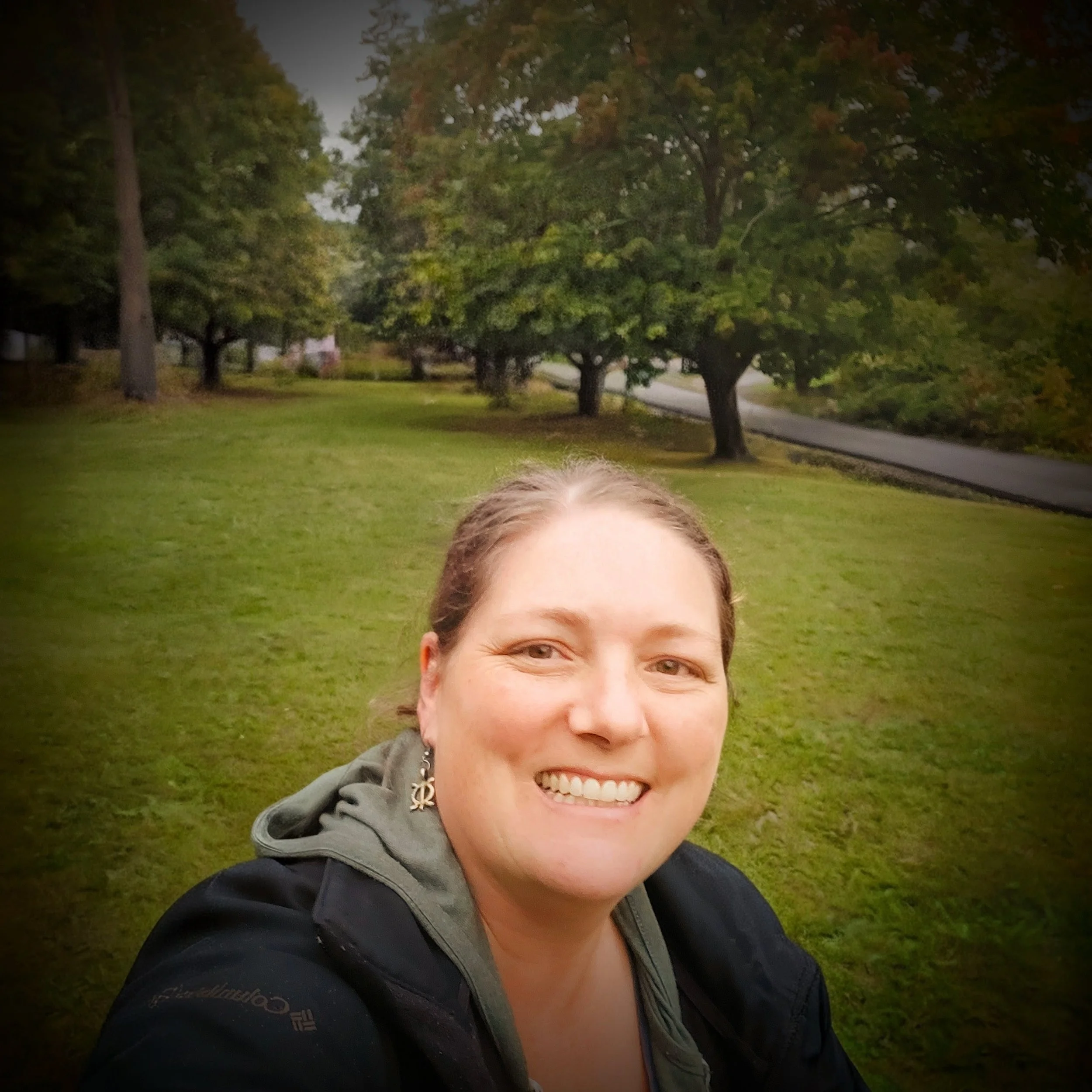
Sheena has been supporting and producing community-based podcasting and social justice community radio for more than a decade. During the pandemic, Sheena co-created Open Air Podcasting, a community-based podcasting initiative that works with community-based organizations, social movements and frontline communities to learn the skills to tell their own stories through podcasting. Sheena holds a Masters in Communication and Social Justice and is a doctoral candidate in the Social Justice Education at University of Toronto. She also works with Seniors for Climate Antigonish, the Maritimes Guatemala Breaking the Silence Network, and Stand.Earth and teaches part-time at St. Francis Xavier University.