From Eco-Grief to Building Community
Webinar Recording
In a world where global warming and multiple crises have an impact on our general mental health, how can we move from eco-grief to having meaningful conversations and build community?
The Warm Data Lab proposes a framework for engaging in such conversations. Rooted in storytelling and systems theory, it is based on the principle that human beings are an intrinsic part of land, nature and planet. The Warm Data Lab and its on-line version of People Need People were developed by the International Bateson Institute and Nora Bateson, who continued the work of her father, the anthropologist and systems theorist Gregory Bateson.
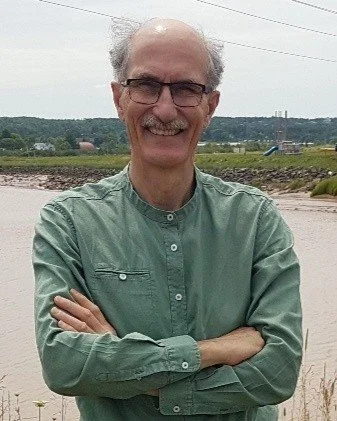
In this workshop, Clinical Therapist, Ivan Drouin will lead a presentation and break out rooms where we will be invited to share stories and discuss the contexts of our ever-changing world.
Event Summary
Opening
Ella welcomed participants to the Zoom call and introduced the session.
Understanding Eco-Anxiety
Ivan described anxiety as a normal and healthy response, like a fever that signals something is wrong in the body.
Given current events like war, climate change, and other global crises, feelings of anxiety are understandable.
He discussed the Process Model of Eco-Anxiety and Ecological Grief, explaining that many people move from a state of semi-conscious awareness to a sudden awakening when they encounter information like IPCC reports, for example, and realize the severity of the climate crisis.
This realization can lead to anxiety, depression, and grief as people recognize the loss of ecosystems, species, places, and ways of life.
Ivan reminded us of the dangers of doomscrolling and noted that people often rush too quickly from knowledge to action without first processing their emotions.
He encouraged participants to consider how communities and communication can support people through these feelings.
Energy Consumption and Fossil Fuels
One of Ivans’ shocks that he shared was that renewable energy now makes up a significant share of global energy production but when examining absolute energy consumption instead of relative consumption, overall energy use continues to increase. Renewables are often being added on top of existing energy consumption rather than replacing fossil fuels.
He emphasized the importance of looking at absolute numbers rather than relative percentages.
Ivan noted that current warming trends suggest the world may reach an average temperature increase of 1.5°C by approximately May 2029 if current trends continue.
Using ideas from Nate Hagens, Ivan explained that a human can produce only about one-tenth of a horsepower.
It would take an individual approximately 4.5 years of labour to generate the energy contained in a single barrel of oil.
He reminded participants that many everyday products are made from oil and that the abundance of cheap fossil fuel energy has significantly increased production and consumption.
Ivan also discussed the strategic importance of oil transportation through the Persian Gulf and how global conflicts can affect energy systems.
According to Hagens' calculations, the average Canadian effectively has the equivalent of approximately 200 salves working for them in the equivalence of horsepower through fossil fuel use.
Ivan suggested that eco-anxiety is an ethical response because it shows our awareness of and connection to the Earth, other people, non-human beings, and the land.
Human Exceptionalism and Ecological Overshoot
While acknowledging that anxiety and depression are valid responses, Ivan emphasized that people can adapt when emotions are recognized, shared, and understood.
Referring to the work of Bill Rees, he argued that humans often view themselves as separate from and superior to nature.
He explained that humanity is currently consuming resources faster than ecosystems can regenerate them and producing waste faster than ecosystems can absorb it.
Many of the dominant ideas shaping modern society originated during the Industrial Revolution and reinforce the notion that humans are separate from the environment.
Ivan asked participants to imagine what it would look like to relate to one another and to nature differently.
Gregory Bateson and “Thinking Like Nature”
Ivan introduced the work of Gregory Bateson, who encouraged people to “think more as nature.”
Bateson explored patterns and relationships across seemingly unrelated systems and asked questions such as what starfish, forests, segmented eggs, and the United States might have in common.
His work focused on understanding relationships, patterns, and systems rather than isolated objects.
Warm Data
Ivan introduced the concept of Warm Data, which refers to transcontextual information that emerges through the living relationships and connections between people and systems.
Warm Data Labs are conversational workshops where participants explore complex societal and personal issues through multiple overlapping contexts, such as family, economics, health, and politics.
Instead of focusing on isolated problem-solving, these conversations help people recognize deeper patterns and relationships.
Breakout Activity: “People Need People”
Participants joined breakout rooms in an online version of a Warm Data Lab called People Need People.
Groups explored a single question through three different contexts, with each group discussing different themes.
The activity encouraged storytelling, multiple perspectives, and making connections across contexts.
The central question for discussion was: “What is essential?”
Storytelling and Human Connection
Ivan shared a personal story about a small encounter that had a lasting impact on him.
While at the Antigonish Landing, he met a woman photographing birds. She mentioned that she often traveled to Canso to photograph birds there.
This brief conversation inspired Ivan to purchase binoculars and visit Canso himself.
He used the story to highlight the importance of storytelling and human connection, reminding participants that people have long shared stories around campfires as a way of learning, building relationships, and making meaning.
Supporting Students Through Eco-Anxiety
In response to a question about what he observes among students in his therapy practice, Ivan noted that he sees many strong emotions related to climate and environmental issues.
However, he emphasized that these experiences are contextual and vary depending on each individual's circumstances, relationships, and environment.
“What are you noticing about yourself?”
Ivan asked this question to participants after the breakout rooms. These are some peoples’ responses:
A sense of connection with these people I never met before
I was surprised and pleased at the number of cross-connections among participants. Yay to NSEN for its networking.
Slowing down and reconsidering: perhaps where Steven Guilbault is right now? Wishing him all the best.
For further learning, a climate psychologist talks about emotional intelligence in climate work : https://www.youtube.com/watch?v=AiRoMlEOw3E
From same person, resources: https://www.unthinkable.earth/resource-hub
After discussions of climate anxiety and childbearing decisions, these sources were brought up for further research:
Galway, Lindsay P., and Emma Field. 2023. “Climate Emotions and Anxiety Among Young People in Canada.” Journal of Climate Change and Health 9:100204.
Miller, Amara, Emily Ernst, Megan Curry, and Abrina Valdez. 2025. “In-Conceivable Futures: Climate Change and Reproductive Decision Making Among Childfree North Americans.” Social Currents 12(3):231–250.
Schneider-Mayerson, Matthew, and Kit Ling Leong. 2020. “Eco-Reproductive Concerns in the Age of Climate Change.” Climatic Change 163(2):1007–1023.